I watched the arctic landscape from above
and thought of nothing, lovely nothing.
I observed white canopies of clouds, vast
expanses where no wolf tracks could be found.
I thought about you and about the emptiness
that can promise one thing only: plenitude—
and that a certain sort of snowy wasteland
bursts from a surfeit of happiness.
As we drew closer to our landing,
the vulnerable earth emerged among the clouds,
comic gardens forgotten by their owners,
pale grass plagued by winter and the wind.
I put my book down and for an instant felt
a perfect balance between waking and dreams.
But when the plane touched concrete, then
assiduously circled the airport’s labyrinth,
I once again knew nothing. The darkness
of daily wanderings resumed, the day’s sweet darkness,
the darkness of the voice that counts and measures,
remembers and forgets.
Photo (c) 2017 William Wolfe (down the street from home!)
One of my favorite things about living in rural Sweden is being able to see the moose/elk all the time. If I go outside in the middle of the night, which I do at least once a week, I am almost guaranteed to see at least one. Many people who have lived in cities and have not spent a lot of time roaming the countryside tell me that they have maybe seen a moose once or twice in their entire lives. This always makes me feel lucky that I see them all the time.
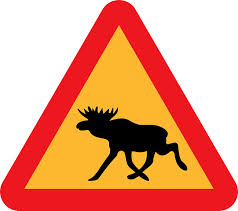
It’s also a time of year when people decide to put giant, handmade, ugly neon signs that read: “VÄRNING! ÄLG!” (“WARNING! MOOSE!”) everywhere.
Elg Norwegian warning sign
In most places in Norway and Sweden there are actual signs that warn of moose – but here in this rural area it is all a DIY effort. The Norwegian signs (the real ones) look like real moose, but the Swedish signs, if you don’t look carefully, look a bit like panthers. Haha. Beware all those wild Swedish panthers.
Swedish älg warning signs
The earlier cited article about Dutch people in Sweden actually made me think of a point that I sometimes question (and it’s not why someone writes the word “assassinate” as “assinate” and posts it on their blog): immigrants (those who have moved completely by choice, like the Dutch woman cited in the article, often report the following feeling: ““In the Netherlands, everyone is always in a hurry. When I went back there recently, I kept thinking: ‘Do you ever take the time to live a little?’.”
This made me wonder whether immigrants (again, by choice) are just by nature more “slowed down” in many cases than those born in a certain place. That is, it is easier to opt out of (or never join in the first place) things that are sort of like family and social obligations that one is often subject to at “home”. My life for example was always full of obligations, greater speed and involvement and integration where I came from – and no matter how I aimed to integrate and ingratiate (haha), I still was kind of “apart”, which naturally slows me down. Did I entirely choose to take the time to live a little or is it a matter more of circumstance because I am not totally integrated and also don’t feel like I have to fit into some preconceived idea about what I have to do and what is expected of me? I hear this “moving abroad helped me take time to live a little” – and immigrants often credit the “slower, more appreciative culture” to which they have moved – but I doubt very much that it is wholly or even appreciably attributable to the adopted country’s culture (in many cases) as much as it is the immigrant’s interpretation and place in that culture.
“You cannot trust me/I will stab you in the back/I’ll sell your grandma on the street to buy some crack/if crack is not available, I’ll buy gelato/you have to take things as they come that is my motto…”
“I have been fucked over a thousand times or two, and now I feel that I must take it out on you…“