Sexism, misogyny, racism and inequality in women’s sports

Standard

The tension and irritation has been building up in me for a long time, even though I was unaware of its presence and imperceptible growth. I am not an athlete nor am I someone who has been vocally feminist for much of my life. I had a few conversations with former colleagues – women who were much older than me, who had been through some of the trials of being the only woman working in a completely male-dominated workplace (an air traffic control center). It’s not as though women are not expected somehow – still – to take notes and make the coffee, but back then it was not just understood but was blatantly stated as a requirement and not questioned. Fighting against these slights in daily work life has never been a conscious part of my life. But strides made by women who came before me paved the way for me not to have to think about such things (as well as the installation of automatic coffee machines!).

I believe wholeheartedly in equality for everyone – and I mean everyone – but when I undertook a master’s program in gender studies, the extremes of feminist theory put me off by being so anti-man. I have not personally suffered – to my knowledge – for being a woman, and I am sure that in some measure this is because I am a white woman who, in the Nordic countries where I live, blends into the scenery and enjoys the privilege that comes from so many different aspects of the accident of my birth and the conscious choice of where I live (which is another layer of privilege – having the choice to decide where to live and to go there).

Similarly Scandinavia conscientiously attempts to lead the way on matters of equality. It does not always succeed, sometimes tripping over itself trying to be “too fair” or politically correct and coming out looking foolish. But the thinking is in the right place. I also say that I have not “consciously” suffered because I don’t know that we are always aware of the things we are numb or indoctrinated to. While no man is outwardly making lewd remarks or insisting that I do something degrading or something that is anything other than equal to what he would do, there have probably been times that I was perceived or treated as “lesser than” because I am a woman. I have been blissfully ignorant to this, if and when it did happen, because my life has still been lived on my terms and has been relatively easy to boot.

Revealing this as my backdrop, I can’t really explain what incensed me and pushed me over the edge about sexism, misogyny and racism in women’s athletics. Not even looking at the flat-out stereotypes any longer (as though all women athletes must exist at caricature-like extremes, i.e. either women who appear as masculine, steroid-pumped sportsmen-lesbians from Cold War era East Germany or ultra-feminine, would-be fashion models who look cute in a short skirt). Either direction these stereotypes travel, they smack of objectification and are on display for the criticism and analysis of the world (and it’s not just men engaging in the bitterest criticism). Not because they are athletes in the public eye but because they are women.

We can see this dynamic quite publicly and visibly played out in the form of Bruce Jenner, former Olympic champion, who is now known as Caitlyn Jenner. As Bruce the athlete, no one would have questioned how he looked or would have sexualized his existence to the degree that all women athletes put up with today. And as Caitlyn, she is suddenly subject to this kind of scrutiny. Jon Stewart explained it best in a recent episode of The Daily Show. Now, suddenly, as a woman, Jenner’s worth is all tied up in her “fuckability” and her beauty.

This holds true for women athletes the world over. And when it is not explicitly about their bodies as objects, and how their bodies and fashion sense reflect on their character (!) or deservedness to win (!!) (e.g., when a Wimbledon winner (Marion Bartoli) is ripped to shreds because she is “too ugly and/or too fat” to win), it’s about the invisibility or lack of support for their sports. FIFA‘s (soon-to-be-former president) Sepp Blatter infamously remarked that women’s football might be more popular if they wore tighter/shorter shorts; Al Jazeera reported on the discrimination against female footballers in Brazil while The Atlantic reports that Brazil’s biggest male footballer makes 15 million USD a year, while its biggest female football star cannot find a team to play for. Al Jazeera and more recently John Oliver highlighted the sexist inequality of FIFA insisting that the women’s World Cup be played on artificial turf rather than grass.

All of this is frustrating but not quite the infuriating push I needed to get really angry. Instead, Serena Williams’s win at the French Open this weekend finally made me seethe with rage. Looking at her winning history, she is singularly the greatest female tennis player ever to play the game. Can she be recognized simply for these record-breaking achievements in athleticism and sporting victory? No.

No one is or has been (in recent memory) more susceptible to the powerful and ugly forces of sexism, misogyny, racism and inequality than Serena Williams.

If all female pro-athletes, particularly in a “demure” arena like tennis, are treated like sex objects who should be supermodels, what can we expect? And when the kind of racially charged, barely veiled racist language cues come into play on top of the sexism and objectifying, shouldn’t every woman be angry?

**Edited later to note that The Atlantic published a piece on French Open men’s champion, Stan Wawrinka, which states: “It’s that Wawrinka doesn’t look or comport himself like a Grand Slam champion. From his bright pink “pajama” shorts to his faintly dadboddish physique, the Swiss native looks more like someone you’d find at Home Depot than Roland Garros.” Finally someone jumps on what a man looks like and how he “comports” himself. Equality, right?
Almost Perfect Nordics

Standard

A dear colleague and friend gave me the book The Almost Nearly Perfect People: The Truth About the Nordic Miracle by Michael Booth. I am only into the introduction so far, but it has already made me laugh some chuckles of recognition:

“But where were the discussion about Nordic totalitarianism and how uptight the Swedes are; about how the Norwegians have been corrupted by their oil wealth to the point where they can’t even be bothered to peel their own bananas; how the Finns are self-medicating themselves into oblivion; how the Danes are in denial about their debt, their vanishing work ethic, and their place in the world; and how the Icelanders are, essentially, feral?”

summer reading

Standard

I have definitely fallen off the daily blogging wagon. I guess it’s hard when there are so many other things going on.

This week I have been given two books – summer reading time.

The first: Michael Booth’s The Almost Nearly Perfect People: Behind the Myth of the Scandinavian Utopia. It looks fantastic and hilarious as well as informative.

Next Donna Tartt’s The Goldfinch.

Looking forward to both – it has been far, far too long since I read something for the sheer enjoyment of reading. (Hungarian language textbooks aside.)

Scandinavian Man Invasion on TV

Standard

Anyone as obsessed with TV as I am knows that Nordic TV shows have asserted a kind of quality and dominance that has garnered well-deserved praise and attention (and the inevitable English-language – and other – remakes, as with The Killing mirroring the Danish Forbrydelsen and the Swedish/Danish production Bron spawning American/Mexican offshoot, The Bridge, and UK/French offshoot, The Tunnel).

Amidst the sea of fantastic Scandinavian television show choices, one cannot overlook the strength and ubiquity of the Scandinavian actors on English-language TV shows. TV has been taken over by Scandinavian men… I will undoubtedly forget some of them (yes there are that many!) but the most notable that spring to mind right now include some pretty startling, arresting performances:

Mads Mikkelsen (Denmark) in Hannibal

Ulrich Thomsen (Denmark) in Banshee

Nikolaj Coster-Waldau (Denmark) in Game of Thrones

Joel Kinnaman (Sweden/USA) in The Killing

Alexander Skarsgård (Sweden) in True Blood

Bill Skarsgård (Sweden) in Hemlock Grove

Peter Stormare (Sweden) in The Blacklist

Of note, Stormare is also starring in a series of Volvo Trucks ads (not unlike Jean-Claude Van Damme!) that champions Swedish values – see below. Stormare rules – cannot help but think of him again frequently now that there is a TV version of Fargo. He was a highlight in the film version.

Better safe than sorry!

Look at him “fika” all by himself!

Might not want to try “allemansrätten” wherever you come from (especially the USA where “stand your ground” might take precedence)

Nowhere in the world will you see as many dads with prams!

Substantial Swedish food!

Lagom! The Swedish Goldilocks complex!

Darri Ingólfsson (Iceland) in Dexter

Christopher Heyerdahl (Canada) in Hell on Wheels (honorable mention since he is not really a Norwegian but beautifully plays a Norwegian who shifts like a chameleon into different identities as it suits him but is known in the beginning as “The Swede”)

Updated

Gustaf Skarsgård (Sweden) – Vikings (Yes, there are a lot of those Skarsgårds!)

Kristofer Hivju (Norway) – Game of Thrones (Finally – a real Norwegian to add to the list!)

Dentistry, tooth meat and oral health: Your pain is nothing to me

Standard

Lately I have had a number of conversations about dentistry and the whole fun tooth-and-gums thing. Maybe I think about this more than many thanks to my childhood spent in dentist chairs and the mouthful of problems I have always had. Probably for these reasons I am not scared of dentists or the frightening-sounding procedures they want to do. Everyone I know seems terrified of the ominous “root canal”, but for me, the root canals I’ve had have provided nothing but relief, even if getting one is not the most comfortable thing ever.

One of the free online courses I signed up for and never actually participated in was something called Intro to Dentistry. Why would I sign up for this? To practice DIY dentistry in my barn? Still, I can’t explain why these things are so fascinating to me. I don’t literally want to dig around in people’s mouths, but I love the idea of knowing about the various teeth and teeth ailments that afflict people.

Always want to know too many different things – ever the dilettante. After talking with someone about his mouth/gum problem and how much pain he was in, I came back to the question of whether men and women feel pain differently. I contemplate often how little pain men seem to be able to withstand comparatively speaking – and I don’t know if it is physiological (they feel pain differently, they feel different kinds of pain differently) or psychological (they feel more compelled to complain about it – and that is not always true but usually is – or what?). Just when I think maybe they can’t handle pain, they volunteer themselves to participate in a boxing match – which must be painful in its own way. But then adrenaline kicks in and they must not feel it – or feel it in the same way as they feel a toothache. A toothache is a singular misery, but the rush, excitement, testosterone, adrenaline,

But if this is true that men are just reporting such agony and pain, how can it also be true that women report feeling more intense pain than men? Not that any of this is definitive – the science of it is pretty much non-existent and can be influenced by so many factors – also the science in the cited article is based a lot on self-reported perceptions of pain.

Hard to say for sure, but the science seems to say that women are more sensitive to pain – but not necessarily doing anything about it or being vocal about it. I suppose it depends – but in my experience, the women who complain most about pain are usually hypochondriacs (or seem to be).

“…male and female bodies don’t process pain the same way. If a man and a woman each place their hands on a hot stove, different parts of their brains will activate. In 2003, researchers at UCLA discovered that the cognitive, or analytic, region of the male brain lights up, while the female limbic system, the brain’s emotional headquarters, springs into action

So does that emotionally charged limbic response mean that women are merely making a louder fuss than men over the same amount of pain? Not quite.”

I just have trouble matching up how most women I know behave when in pain against how much pain they report being in and how men behave when in what seems like minor pain. Not only are women perhaps in more intense pain, they are certainly reticent and stoic about it. It seems. I know I am making generalizations and have no qualifications for saying a word about any of these matters, really.

What I am a bit more qualified to throw my irritation around about, though, is words. And one word that has haunted me since I first arrived in Norway is the word tannkjøtt – literally “tooth meat”. Yes, this refers to the gums. But come on – tooth meat?! I remember just having arrived in Norway, feeling completely upside-down and out of place, staying at a friend’s house, turning on the tv and understanding barely a word of Norwegian, and hearing this one improbable word I did pick out immediately. A commercial for toothpaste or something, a confident dentist coming on the screen blabbing away about “tannkjøtt” health.

Summer?

Standard

God syttende mai, Norwegians! Could not have received a better hand when it comes to weather.

Today for the first time in ages, when I opened the window (because the sun beating in was too hot), cold air did not come blasting in – as it does most of the year. Could it be that summer is here?

For some unknown reason I made pancakes today. I don’t like pancakes particularly but I felt suddenly very… American and made a few very American-style pancakes.

Summer” – Magic Kids

Norwegian grammar threats

Standard

For some unknown reason, here on the eve of the Norwegian national day, I am reading a Norwegian grammar book. I don’t really need to learn NorwegianSwedish would be more useful, but I am known for never doing exactly what I should be.

What I take note of is some of the rather funny example statements in the book. Having attempted to write more than my fair share of user documentation and guidelines in my career, I know firsthand how difficult coming up with good examples can be.

But in this Norwegian book there were some that made me laugh and question simultaneously.

First example: “Hun drev og reparerte bilen da han kom.” The translation given is: “She was in the process of/in the throes of repairing the car when he arrived.” What I found funny was the translation: “in the throes of” – technically not wrong but rarely would “in the throes of” be used in this way. Sure, it means “in the middle of doing something arduous or difficult”. Maybe repairing a car is tremendously challenging, but “in the throes of“? Much more often we see “in the throes of passion” or “the throes of the agony of childbirth” or something. Does fixing a car qualify on that level?

Second examples, in which the book shares information about modal auxiliaries, include sample sentences using the verb “skal/skulle” (shall/should) in a variety of contexts (expressing commands, doubts, promises, etc.). One context is the almighty threat! These threats actually made me laugh because they seemed so menacing. When I actually learn Norwegian (HA! As if that is ever going to happen), I am sure these sentences will be the first to spring forth:

“Hvis du ikke kommer med en gang, skal du få juling.”
If you don’t come at once, you’ll get a beating.

Even better and more violent:

“Hvis dere sier noe, skal vi drepe dere.”
If you say anything, we’ll kill you.


Don’t Repeat Ugly History

Standard

A Swedish political video recently went viral. It features the grandson of Nazi Rudolf Höss. The grandson, Rainer Höss, whom I have seen in documentaries about the descendants of Third Reich leadership, has been trying to work through the burden of his own history all his life. He declares in this hard-hitting ad: “My history taught me that democracy and equality and human rights never can be taken for granted.”

“Never forget. To vote.”

Weird but in a Good Way: The Road Not Taken

Standard

It’s Getting Light Outside” – Clearlake

It’s good to notice all the ways we’ve changed, and even better, how we’ve stayed the same. I’d love to know – tell me everything – I want to know exactly how you’ve been before you know, we’ll forget the time and turn around and find we’ve talked all night – it’s getting light outside.

Poetry was brought up in a team meeting when new colleagues had to introduce themselves. One said she has, as the Robert Frost poem describes, preferred to take the road less traveled by (“The Road Not Taken”) and mentioned Robert Frost (my favorites of his are less known but no less rich – see below)… while another colleague (the unique, snus-enthusiast character who is urging me to get chickens, has proffered chicken eggs to prod this process along) announced quite proudly that she is “weird”. (This reminded me that I stated in my own interview for this particular job that I am “weird but in a good way” – my manager must like to hire unusual but competent people.)

Perhaps I have thus become a poetry-spouting, budding but incremental farmer of sorts – contemplating the chickens my colleague is so fond of while actually liking the look of ducks, which are apparently also an option, albeit a less popular one. I am still in doubt – without a house husband or some similar figure who cares for these creatures and nurtures them (which hired help would not do) – as one friend said today, he would talk to them a great deal – I can’t take even such a small step toward “farming”. Farming is, after all, a “labor of love” that very few people take on because it will provide them a living. Rather it brings joy and purpose into daily life as well as a kind of routine, as evidenced by the popularity of raising chickens in one’s backyard and the rise of a magazine like Modern Farmer in an era when publishing is actually declining.

(An unrelated story except for chicken involvement – but one which put a smile on my face – here’s a headline and article about someone’s apparent “cocking around”: “Guilty of “cocking around””.)

Meanwhile, other Frost favorites – absolutely beautiful.

To Earthward

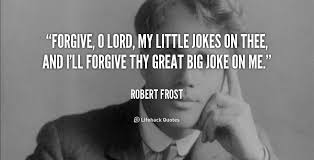
“Forgive O Lord” by Robert Frost

“Forgive O Lord” by Robert Frost

Tourist Season in Western Sweden

Standard

Tourist season has begun. Hordes of Germans and Dutch and their cars usually flood into western Sweden when May/June starts, but today I even got behind a slow-driving, confused and ugly French car. Worse than any actual French car (Renault, Citroen or Peugeot) is a Nissan Juke. I think this is one of the ugliest cars with THE dumbest car name possible. Who chose “Juke” and what is it even supposed to mean? (“Please meet not only our least favorite car of 2012, but our least favorite car of our quarter century lives.“)

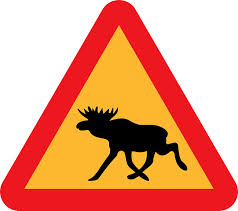
It’s also a time of year when people decide to put giant, handmade, ugly neon signs that read: “VÄRNING! ÄLG!” (“WARNING! MOOSE!”) everywhere.

Elg Norwegian warning sign

Elg Norwegian warning sign

In most places in Norway and Sweden there are actual signs that warn of moose – but here in this rural area it is all a DIY effort. The Norwegian signs (the real ones) look like real moose, but the Swedish signs, if you don’t look carefully, look a bit like panthers. Haha. Beware all those wild Swedish panthers.

Swedish älg warning signs

Swedish älg warning signs

The earlier cited article about Dutch people in Sweden actually made me think of a point that I sometimes question (and it’s not why someone writes the word “assassinate” as “assinate” and posts it on their blog): immigrants (those who have moved completely by choice, like the Dutch woman cited in the article, often report the following feeling: ““In the Netherlands, everyone is always in a hurry. When I went back there recently, I kept thinking: ‘Do you ever take the time to live a little?’.”

This made me wonder whether immigrants (again, by choice) are just by nature more “slowed down” in many cases than those born in a certain place. That is, it is easier to opt out of (or never join in the first place) things that are sort of like family and social obligations that one is often subject to at “home”. My life for example was always full of obligations, greater speed and involvement and integration where I came from – and no matter how I aimed to integrate and ingratiate (haha), I still was kind of “apart”, which naturally slows me down. Did I entirely choose to take the time to live a little or is it a matter more of circumstance because I am not totally integrated and also don’t feel like I have to fit into some preconceived idea about what I have to do and what is expected of me? I hear this “moving abroad helped me take time to live a little” – and immigrants often credit the “slower, more appreciative culture” to which they have moved – but I doubt very much that it is wholly or even appreciably attributable to the adopted country’s culture (in many cases) as much as it is the immigrant’s interpretation and place in that culture.

Sound du jour: John Grant – “That’s the Good News

You cannot trust me/I will stab you in the back/I’ll sell your grandma on the street to buy some crack/if crack is not available, I’ll buy gelato/you have to take things as they come that is my motto…

I have been fucked over a thousand times or two, and now I feel that I must take it out on you…