Advice to Myself
–Louise ErdrichLeave the dishes.
Let the celery rot in the bottom drawer of the refrigerator
and an earthen scum harden on the kitchen floor.
Leave the black crumbs in the bottom of the toaster.
Throw the cracked bowl out and don’t patch the cup.
Don’t patch anything. Don’t mend. Buy safety pins.
Don’t even sew on a button.
Let the wind have its way, then the earth
that invades as dust and then the dead
foaming up in gray rolls underneath the couch.
Talk to them. Tell them they are welcome.
Don’t keep all the pieces of the puzzles
or the doll’s tiny shoes in pairs, don’t worry
who uses whose toothbrush or if anything
matches, at all.
Except one word to another. Or a thought.
Pursue the authentic-decide first
what is authentic,
then go after it with all your heart.
Your heart, that place
you don’t even think of cleaning out.
That closet stuffed with savage mementos.
Don’t sort the paper clips from screws from saved baby teeth
or worry if we’re all eating cereal for dinner
again. Don’t answer the telephone, ever,
or weep over anything at all that breaks.
Pink molds will grow within those sealed cartons
in the refrigerator. Accept new forms of life
and talk to the dead
who drift in through the screened windows, who collect
patiently on the tops of food jars and books.
Recycle the mail, don’t read it, don’t read anything
except what destroys
the insulation between yourself and your experience
or what pulls down or what strikes at or what shatters
this ruse you call necessity.
American poetry
An astringent person
StandardThen Time
–Robert Hass
In winter, in a small room, a man and a woman
Have been making love for hours. Exhausted,
Very busy wringing out each other’s bodies,
They look at one another suddenly and laugh.
“What is this?” he says. “I can’t get enough of you,”
She says, a woman who thinks of herself as not given
To cliché. She runs her fingers across his chest,
Tentative touches, as if she were testing her wonder.
He says, “Me too.” And she, beginning to be herself
Again, “You mean you can’t get enough of you either?”
“I mean,” he takes her arms in his hands and shakes them,
“Where does this come from?” She cocks her head
And looks into his face. “Do you really want to know?”
“Yes,” he says. “Self-hatred,” she says. “Longing for God.”
Kisses him again. “It’s not what it is,” a wry shrug,
“It’s where it comes from.” Kisses his bruised mouth
A second time, a third. Years later, in another city,
They’re having dinner in a quiet restaurant near a park.
Fall. Earlier that day, hard rain: leaves, brass-colored
And smoky-crimson, flying everywhere. Twenty years older,
She is very beautiful. An astringent person. She’d become,
She said, an obsessive gardener, her daughters grown.
He’s trying not to be overwhelmed by love or pity
Because he sees she has no hands. He thinks
She must have given them away. He imagines,
Very clearly, how she wakes some mornings,
(He has a vivid memory of her younger self, stirred
From sleep, flushed, just opening her eyes)
To momentary horror because she can’t remember
What she did with them, why they were gone,
And then remembers, calms herself, so that the day
Takes on its customary sequence again.
She asks him if he thinks about her. “Occasionally,”
He says, smiling. “And you?” “Not much,” she says,
“I think it’s because we never existed inside time.”
He studies her long fingers, a pianist’s hands,
Or a gardener’s, strong, much-used, as she fiddles
With her wineglass and he understands, vaguely,
That it must be his hands that are gone. Then
He’s describing a meeting that he’d sat in all day,
Chaired by someone they’d felt, many years before,
Mutually superior to. “You know the expression
‘A perfect fool,'” she’d said, and he has liked her tone
of voice so much. She begins a story of the company
In Maine she orders bulbs from, begun by a Polish refugee
Married to a French-Canadian separatist from Quebec.
It’s a story with many surprising turns and a rare
Chocolate-black lily at the end. He’s listening,
Studying her face, still turning over her remark.
He decides that she thinks more symbolically
Than he does and that it seemed to have saved her,
For all her fatalism, from certain kinds of pain.
She finds herself thinking what a literal man he is,
Notices, as if she were recalling it, his pleasure
In the menu, and the cooking, and the architecture of the room.
It moves her – in the way that earnest limitation
Can be moving, and she is moved by her attraction to him.
Also by what he was to her. She sees her own avidity
To live then, or not to not have lived might be more accurate,
From a distance, the way a driver might see from the road
A startled deer running across an open field in the rain.
Wild thing. Here and gone. Death made it poignant, or,
If not death exactly, which she’d come to think of
As creatures seething in a compost heap, then time.
insucking genesis
StandardThe Sea
–Mary Oliver
Stroke by
stroke my
body remembers that life and cries for
the lost parts of itself–
fins, gills
opening like flowers into
the flesh—-my legs
want to lock and become
one muscle, I swear I know
just what the blue-gray scales
shingling
the rest of me would
feel like!
paradise! Sprawled
in that motherlap,
in that dreamhouse
of salt and exercise,
what a spillage
of nostalgia pleads
from the very bones! how
they long to give up the long trek
inland, the brittle
beauty of understanding,
and dive,
and simply
become again a flaming body
of blind feeling
sleeking along
in the luminous roughage of the sea’s body,
vanished
like victory inside that
insucking genesis, that
roaring flamboyance, that
perfect
beginning and
conclusion of our own.
“where I am unborn”
StandardStray Animals
–James Tate
This is the beauty of being alone
toward the end of summer:
a dozen stray animals asleep on the porch
in the shade of my feet,
and the smell of leaves burning
in another neighborhood.
It is late morning,
and my forehead is alive with shadows,
some bats rock back and forth
to the rhythm of my humming,
the mimosa flutters with bees.
This is a house of unwritten poems,
This is where I am unborn.
Photo (c) 2011 Patrick Slaven used under Creative Commons license.
not yet human
StandardBirth
–Louise Erdrich
When they were wild
When they were not yet human
When they could have been anything,
I was on the other side ready with milk to lure them,
And their father, too, each name a net in his hands.
lost
StandardThe Pill versus the Springhill Mine Disaster
–Richard Brautigan
When you take your pill
it’s like a mine disaster.
I think of all the people
lost inside of you.
Photo (c) 2013 lookcatalog used under Creative Commons license.
caught in sleep’s undertow
Standardslugs
StandardConnoisseuse of Slugs
–Sharon Olds
When I was a connoisseuse of slugs
I would part the ivy leaves, and look for the
naked jelly of those gold bodies,
translucent strangers glistening along the
stones, slowly, their gelatinous bodies
at my mercy. Made mostly of water, they would shrivel
to nothing if they were sprinkled with salt,
but I was not interested in that. What I liked
was to draw aside the ivy, breathe the
odor of the wall, and stand there in silence
until the slug forgot I was there
and sent its antennae up out of its
head, the glimmering umber horns
rising like telescopes, until finally the
sensitive knobs would pop out the ends,
delicate and intimate. Years later,
when I first saw a naked man,
I gasped with pleasure to see that quiet
mystery reenacted, the slow
elegant being coming out of hiding and
gleaming in the dark air, eager and so
trusting you could weep.
Photo (c) 2010 Karen Neoh used under Creative Commons license.
Nostalgia, sentimentality, old age and Japanese language camp
Standard“even N, who founded the modernist magazine Luna
while Japan prepared to invade China
got sentimental after he went on his pension ……when he was young N wrote “I say strange things”
was it the monster that pumped tears from his older eyes?”-From “My Imperialism” (Ryuichi Tamura)
I started yet another conversation with a reference to attending Japanese language camp. This never ceases to amuse others, some thinking it sounds like the height (or depth) of total geekery, some thinking it sounds too similar to something like a forced death march or a Japanese internment camp. But alas, no, I studied almost all the languages my high school had to offer (German was the only exception, which made the Frau teaching German feel quite left out). Back in those fearful days of American decline (ongoing), when Bush senior caused an international incident by vomiting at the Japanese prime minister’s residence, and we all thought Japan was going to take over the world, we on the American west coast were hedging our bets, picking up our hashi and “nihongo o benkyooshimashita” 日本語を勉強しました. The Japanese were in fact helping us – subsidizing us – giving us money and camps and all the rest so we could immerse ourselves in Japanese language and culture for weeks at a time in the rural woods of western Washington. Never mind that I was never a “camp going”, group activity kind of girl – I tried to tell my teachers that I did not have the money for such a thing, but the school district had money to burn, I guess, and had never had a student like me (not that I was remarkable – it is just that I was the only one who ever willingly took so much language study at once). They paid for the camp.
The point of this – although I am not terribly nostalgic about those days, some characters from Japanese language camp come to mind sometimes. I only keep in touch with one guy – and got a letter from him yesterday. He shared some rather alarming news after a long (an entire adulthood) correspondence of mostly mundane stuff between us – sure, each of us moved back and forth between countries and had things happen, but nothing that does not happen to everyone. And suddenly, almost like a postscript, he added something rather serious, even stating that he “did not want to make a big deal out of it” – which I completely understand – but still I had to stop and catch my breath and suddenly reflect on… the deceptive, wicked nature of time. Even if time is just a manmade construct and has no inherent evil whatsoever. All that is truly deceptive about it is our human caprice and wont to waste time, playing games – or rather waste feelings, being petty and not doing what our heart really desires in life. Time and our perception of it imbues us with false confidence, with fear, with nostalgic sentimentality.
I am sitting in my car hanging out in a parking lot, reflecting on the way time has passed since meeting this Japanese language camp friend – we met each other in 1991, which still feels a lot like yesterday except that it was almost 25 years ago. This is how even the unsentimental start to feel the pull of nostalgia.
”I wish nostalgia had a body so that I could push it out of the window! To smash what cannot be!” –Odysseus Elytis -Οδυσσέας Ελύτης
It starts to weigh them down when they can talk about how a quarter-century has passed and it felt a lot like the blink of an eye. I may not be overly sentimental myself, but this is how I have lost myself in poetry. The words I feel have been captured somewhere else. It’s a Ryuichi Tamura-田村隆一 kind of morning.
My Imperialism
by Ryuichi TamuraI sink into bed
on the first Monday after Pentecost
and bless myself
since I’m not a ChristianYet my ears still wander the sky
my eyes keep hunting for underground water
and my hands hold a small book
describing the grotesqueness of modern white societywhen looked down at from the nonwhite world
in my fingers there’s a thin cigarette-
I wish it were hallucinogenic
though I’m tired of indiscriminate ecstasyThrough a window in the northern hemisphere
the light moves slowly past morning to afternoon
before I can place the red flare, it’s gone:
darknessWas it this morning that my acupuncturist came?
a graduate student in Marxist economics, he says he changed
to medicine to help humanity, the animal of animals, drag itself peacefully to its deathbed
forty years of Scotch whisky’s roasted my liver and put me
into the hands of a Marxist economist
I want to ask him about Imperialism, A Study–
what Hobson saw in South Africa at the end of the nineteenth century
may yet push me out of bed
even if you wanted to praise imperialism
there aren’t enough kings and natives left
the overproduced slaves had to become whiteOnly the nails grow
the nails of the dead grow too
so, like cats, we must constantly
sharpen ours to stay alive
Only The Nails Grow-not a bad epitaph
when K died his wife buried him in Fuji Cemetery
and had To One Woman carved on his gravestone
true, it was the title of one of his books
but the way she tried to have him only
to herself almost made me cry
even N, who founded the modernist magazine Luna
while Japan prepared to invade China
got sentimental after he went on his pension;
F, depressed
S, manic, builds house after house
A has abdominal imperialism: his stomach’s colonized his legs
M’s deaf, he can endure the loudest sounds;
some people have only their shadows grow
others become smaller than they really are
our old manifesto had it wrong: we only looked upward
if we’d really wanted to write poems
we should have crawled on the ground on all fours-
when William Irish, who wrote Phantom Lady, died
the only mourners were stock brokers
Mozart’s wife was not at his funeralMy feet grow warmer as I read
Kotoku Shusui’s Imperialism, Monster of the Twentieth Century, written back in 1901
when he was young N wrote “I say strange things”
was it the monster that pumped tears from his older eyes?Poems are commodities without exchange value
but we’re forced to invade new territory
by crises of poetic overproductionWe must enslave the natives with our poems
all the ignorant savages under sixty
plagued by a surplus of clothes and food-
when you’re past sixty
you’re neither a commodity
nor human
But it is so much more than just Tamura lamenting the sentimentality of old age. It is also the nostalgia – looking back at people, events – what has deeply affected and wounded us, things we carry for years, imprinted on us even when the person or event is long ago and the deep impression we have belies the brevity of these memorable encounters.
“With the incomparable feeling of rising and of being like a banner
Twenty seconds worth twenty-five years” (from “To Marina” by Kenneth Koch)
That sudden sense that one second you were an awkward and completely artistically inept kid fumbling imprecisely with the Japanese art form katazome. And the next you are shaking your head, remembering the details of that time so clearly, wondering, “Could that really have been twenty-five years ago?” (The twenty-five year mark comes up a few times in Kenneth Koch’s masterpiece, “To Marina” – possibly my favorite poem of all time.)
“We walk through the park in the sun. It is the end.
You phone me. I send you a telegram. It
Is the end. I keep
Thinking about you, grieving about you. It is the end. I write
Poems about you, to you. They
Are no longer simple. No longer
Are you there to see every day or
Every other or every third or fourth warm day
And now it has been twenty-five years
But those feelings kept orchestrating I mean rehearsing
Rehearsing in my and tuning up
While I was doing a thousand other things, the band
Is ready, I am over fifty years old and there’s no you—
And no me, either, not as I was then,
When it was the Renaissance
Filtered through my nerves and weakness
Of nineteen fifty-four or fifty-three,
When I had you to write to, when I could see you
And it could change.”
Weird but in a Good Way: The Road Not Taken
Standard“It’s Getting Light Outside” – Clearlake
“It’s good to notice all the ways we’ve changed, and even better, how we’ve stayed the same. I’d love to know – tell me everything – I want to know exactly how you’ve been before you know, we’ll forget the time and turn around and find we’ve talked all night – it’s getting light outside.”
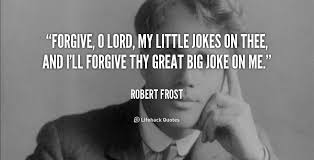
Poetry was brought up in a team meeting when new colleagues had to introduce themselves. One said she has, as the Robert Frost poem describes, preferred to take the road less traveled by (“The Road Not Taken”) and mentioned Robert Frost (my favorites of his are less known but no less rich – see below)… while another colleague (the unique, snus-enthusiast character who is urging me to get chickens, has proffered chicken eggs to prod this process along) announced quite proudly that she is “weird”. (This reminded me that I stated in my own interview for this particular job that I am “weird but in a good way” – my manager must like to hire unusual but competent people.)
Perhaps I have thus become a poetry-spouting, budding but incremental farmer of sorts – contemplating the chickens my colleague is so fond of while actually liking the look of ducks, which are apparently also an option, albeit a less popular one. I am still in doubt – without a house husband or some similar figure who cares for these creatures and nurtures them (which hired help would not do) – as one friend said today, he would talk to them a great deal – I can’t take even such a small step toward “farming”. Farming is, after all, a “labor of love” that very few people take on because it will provide them a living. Rather it brings joy and purpose into daily life as well as a kind of routine, as evidenced by the popularity of raising chickens in one’s backyard and the rise of a magazine like Modern Farmer in an era when publishing is actually declining.
(An unrelated story except for chicken involvement – but one which put a smile on my face – here’s a headline and article about someone’s apparent “cocking around”: “Guilty of “cocking around””.)
Meanwhile, other Frost favorites – absolutely beautiful.