Stat Explosion and Data Overload

Standard

May 18 skewed my blog statistics in a big way. As someone who manages a very niche, limited-reach blog for a corporation in my professional life (obviously not THIS blog), this sudden and brief explosion was an interesting look at what immediately drives traffic (a retweet from a famous person). Or rather what won’t. The corporate blog gets readers, and the number of readers and subscribers grows slowly but steadily. It is such a specialized area that it is not as though it would ever get the kind of readership that even my personal blog gets – and my personal blog is all over the place – personal, lacking in a theme or point and not actively trying to drive anything. It started as a baking/recipe blog when my colleagues (whom I had stuffed to near-death with cookies and cupcakes) demanded recipes. It evolved into a dumping ground for my thoughts and commentary on television, news/current events and all manner of other nonsense. Even if my personal blog had a steadier stream of traffic than my work blog (makes sense because the randomness of my personal blog means that all kinds of Google searches, from Mobutu Sese Seko to white chocolate macadamia cookies, from the benefits of telecommuting, to pictures of brown sugar cupcakes piled high with mounds of maple Swiss meringue buttercream and candied bacon. might lead someone to my blog), I never achieved any great reach.

on the bacon bandwagon

on the bacon bandwagon

Until today, my personal blog’s best stats never reached more than 250 visitors – and that was when I was baking a lot and posting recipes and pictures of cakes. In the absence of that, I maybe get 30 or 40 visitors. I am not that concerned with the statistics on my personal blog – I write it for my own sake and if someone else gets there and likes it, or even doesn’t like it, that’s fine with me.

But this morning, which has felt like a neverending night now that Swedish near-endless light nights are here, I posted an article about how I finally watched the witty and insightful Inside Amy Schumer, despite the misleading, one-dimensional Comedy Central ads for it that had so long turned me off. I posted about the blog via Twitter, which was retweeted from Schumer’s own account, which then led to what is for me an unprecedented avalanche of activity. Suddenly my phone was chiming: ding ding ding ding ding ding because, thanks to Schumer’s devotees (a more pleasant word than “followers”), people were retweeting and favoriting my original tweet. (Yes, I am perfectly aware of how asinine this sounds. A non-Millennial person describing the tweet and retweet process like it’s really serious business just sounds funny – even if it does have its own importance. It’s just not the be-all, end-all.)

But more than that, the link to the blog in which I wrote about changing my mind about Amy Schumer’s show made the blog statistics skyrocket. In a couple of hours, there were well over 1,000 visitors. The downside is that this opens the door to a lot of unprovoked criticism from complete strangers. But then yeah, the world’s full of haters, and that is completely fine. I hate a lot of stuff too. It is also easy to have a knee-jerk reaction (no emphasis on “jerk” or anything) – as I did to the ads, and as the commenter had to my post. But I am sure we are both cool enough people in our real lives.

The only comment on the Amy Schumer blog entry, in fact, was a negative one, basically laying into me for my “judgmental, accusatorial” observations about an ad. But, as I commented back (and I think we’re cool now), most of our judgments and decisions are kind of “split second” in nature – especially to ads. They are meant to appeal to us on some level, get our attention and in 30 seconds to make us want to do something, consume something, watch something or buy something (I won’t even use as strong a word as “persuade” since it’s more like advertisers tease and tempt with an elevator speech – so shouldn’t it be a bit more tempting, somehow?). Of course, I don’t know who the target audience was with the Schumer ads, but it’s not me – and that’s fine. But I still had to see them, and I made a judgment that watching the show might not be the best use of my time. Or that it would be as crass and shallow as the ads made it seem. That is no judgment of the show itself or Amy Schumer. And my writing about it was more like, “Hey, I was completely wrong about this – and the two people who read this blog and generally trust my opinions on these matters should know it. Watch Inside Amy Schumer!”

With a fleeting moment of greater reach, you simultaneously become a lightning strike (gone in a flash) and a lightning rod.

I suppose a celeb retweet or starting/being part of a trending topic is the sort of thing that one has to get to gain some traction. Even if, for example, in this case, it is a bunch of clicks – not “traction”. We all know it but there’s no way to predict whether any social media activity will lead to anything. Visitors to my personal blog are nice – but much like in the corporate blog environment, it’s not like they stuck around and read other things. And for personal writing, it doesn’t matter. I write what I write, I post it online and to a limited extent in social channels, but I am not writing for an audience or to achieve something.

But for the corporate writing, you sort of want to extend the reach – establish yourself as a thought leader – but you cannot do anything to damage your credibility or try to somehow get that reach artificially. It doesn’t work and won’t hold anyone’s interest. For instance I could try to steer the corporate blog in a direction where “celebrity surgeons” (is there such a thing other than the odd Dr Oz and some plastic surgeons who show up on makeover shows??) somehow feel compelled to retweet the content, but while that might extend reach for a day, it is not delivering quality or longevity or even the target audience we’d want to reach.

In a kind of related area…

“Data data data – you cannot make bricks without clay…” –Sherlock Holmes in TV show Elementary

All this discussion of statistics should lead to an action plan on how to take advantage of statistics and visitor data to guide future blog content – “give the readers what they want”. At least this is true for the corporate blog – consumer/user/customer responsiveness and centricity is really the only way to ensure continued growth for something like this.

I have been participating in a Coursera/Wharton School online class about marketing, and this week was all about customer-centricity. Since I work a lot with the ideas underpinning “taming Big Data” to gain customer insights in my freelance work, the whole idea of customer focus as one of the only real ways to differentiate makes a lot of sense – and customer data (overload) is the key to giving users what they want.

Never mind that I am totally distracted listening to the professor, Peter Fader, deliver his lectures, because he sounds too much like Bob Odenkirk – so I am supposed to be looking at a PowerPoint slide describing a couple of case studies of companies that have put customer data to good use, but it’s like I am hearing Saul Goodman explaining customer centricity to me. (And Saul Goodman arguably did put his customers first, sometimes to his own detriment and at his own peril.)

This customer-centric, data-driven approach is finally taking root in all kinds of business segments and industries. As Fader pointed out, direct marketing has always used data to target customers – but now, in the digital age, this data is readily available to almost everyone (I won’t get into the ethics of data collection, privacy, etc. except to say that while it’s great for businesses, it’s creepy for customers – see a recent article about a pregnant woman and Princeton professor who had to go to insane lengths to hide her pregnancy from advertisers, retailers and the Big Data machine.) At first companies like Google and Amazon tapped into user data because it’s in their DNA – I have spent a lot of time looking at how old-style, traditional publishers who lost both revenue and subscribers in the big digital shift are now taking back control their data (they had ceded a lot of it to third parties who started taking an ever-larger share of the pie from them) to target their website visitors, readers, subscribers with content and advertising that is highly personalized. And just today I saw a news report about a museum in London that has begun to use all kinds of data collection (traditional and digital) to continue to attract visitors. As the report stated, “Research is a key part of the museum’s arsenal.”

The application of data and personalization is the next logical step, but I wonder about the quality and longevity of this too. Collecting, analyzing and applying user data can only go so far before people feel as though someone is always looking over their shoulder. I cannot help but wonder if that sense of Big Data infiltrating one’s life will start to feel too much like Big Brother and begin to change and influence consumer behavior?

(As advertised – I rambled aimlessly!)
Weird but in a Good Way: The Road Not Taken

Standard

It’s Getting Light Outside” – Clearlake

It’s good to notice all the ways we’ve changed, and even better, how we’ve stayed the same. I’d love to know – tell me everything – I want to know exactly how you’ve been before you know, we’ll forget the time and turn around and find we’ve talked all night – it’s getting light outside.

Poetry was brought up in a team meeting when new colleagues had to introduce themselves. One said she has, as the Robert Frost poem describes, preferred to take the road less traveled by (“The Road Not Taken”) and mentioned Robert Frost (my favorites of his are less known but no less rich – see below)… while another colleague (the unique, snus-enthusiast character who is urging me to get chickens, has proffered chicken eggs to prod this process along) announced quite proudly that she is “weird”. (This reminded me that I stated in my own interview for this particular job that I am “weird but in a good way” – my manager must like to hire unusual but competent people.)

Perhaps I have thus become a poetry-spouting, budding but incremental farmer of sorts – contemplating the chickens my colleague is so fond of while actually liking the look of ducks, which are apparently also an option, albeit a less popular one. I am still in doubt – without a house husband or some similar figure who cares for these creatures and nurtures them (which hired help would not do) – as one friend said today, he would talk to them a great deal – I can’t take even such a small step toward “farming”. Farming is, after all, a “labor of love” that very few people take on because it will provide them a living. Rather it brings joy and purpose into daily life as well as a kind of routine, as evidenced by the popularity of raising chickens in one’s backyard and the rise of a magazine like Modern Farmer in an era when publishing is actually declining.

(An unrelated story except for chicken involvement – but one which put a smile on my face – here’s a headline and article about someone’s apparent “cocking around”: “Guilty of “cocking around””.)

Meanwhile, other Frost favorites – absolutely beautiful.

To Earthward

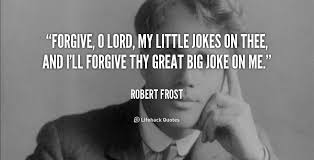
“Forgive O Lord” by Robert Frost

“Forgive O Lord” by Robert Frost

Almost Lover – Soon Will Be Making Another Run?

Standard

I do tend to give people the benefit of the doubt when I shouldn’t – and I keep trying to learn that lesson. But I am human and never do. It is just that I try to see the good in people, be compassionate – and then that gets pushed too far, I guess. But at least usually when I close the door, it’s closed – and I don’t regret it. Or the time or the things I have done with/for those people. But just as I cannot control it, I also know when I cannot continue it.

Fuck You It’s Over” – Glasvegas

I have realized that almost all people are completely out of control and indecisive – and I have to be the decisive one – or as America’s best-ever president (hahaha) Geo W Bush said, “I am the decider“. Haha. And I need to be the adult, the caretaker – not all people are always going to like that, but regardless of their role, at least the issue is fucking decided and it’s back to the drawing board. No wishy washy BS for weeks, months, years that prevent all parties involved from moving forward and taking responsibility for the things in their lives. That is what making decisions – even incremental ones – enables.

Almost Lover” – A Fine Frenzy

Goodbye my almost lover/goodbye my hopeless dream/I’m trying not to think about you/can’t you just let me be?/So long my luckless romance/my back is turned on you/shoulda known you’d bring me heartache/almost lovers always do…

The same actually applies in business. Not that I want to equate the misery of indecision in romantic entanglements with unclear business strategy – but when am I not talking shop? I recently decided to follow an online “basics of marketing” course as kind of a refresher since I work in marketing but was never a marketing student. One of the fundamental points made in creating a strategy is: you can’t do everything, you can’t cater to everyone. Right – this is why we segment and target. But the same principle applies in creating a general business strategy. You can’t really set seven major goals and expect all of them to be met. Choices need to be made and a focus decided. I see this lacking – a lot of talk about strategy and endless meetings about and revisions of strategy but nothing real and tangible that one can bite down on, take a chunk and work toward meaningfully.

At least in a relationship, you can bite down, take a chunk and work toward something if you really want to. But that is a matter of making the choice and focusing too. That’s my conclusion in my old age, sage wisdom and experience – not unlike the great wise, leadership of Captain Stubing on The Love Boat. Hahaha.

Misused Words | J = Y | Don’t Double Down Until You Double Check

Standard

Misuse = Abuse = You Are a Boob

Everyone is brutalizing my beautiful husband, the English language!

How is it that something reads “collegiate” when “collegial” is meant? I know how it happens. You think you heard it or saw it that way and eventually start using it with confidence. And next thing you know you’re throwing your misheard/misused word around all over town. But it’s wrong and could be fixed by just checking and confirming it in a dictionary first. Just to be sure, even if you are sure you’re sure.

I am almost always sure, but I like to double check. (Or, to jump in and use a phrase I hate – and discuss below – Don’t double down until you double check.)

I saw a job ad today that put itself out there as a high-end, exclusive luxury branding manager kind of role. But then in the bulleted highlights, it read: “collegiate environment”. I dunno about you, but if I were going to take on a luxury-goods senior brand management role, I don’t want to feel like I’m back in college – kegger anyone? Which is what “collegiate” means.

In a similar vein, my mom did some work for a writer who wrote the line, “She reached into her brazier” when he actually meant “brassiere”. He was offended when she corrected it. But, pardon the pun, would you rather look like a boob… or actually use the right word for what is essentially… a boob holder?

The Swedish J to Y

It isn’t that Swedes cannot say “J” as in “just” or “judge” or “jet lag”. In some constructions, depending on where the “j” comes in the word they want to say, they say the “dj” sound. In many others they pronounce it “y”. Many Swedes pronounce it “y” always. So it’s “yet lag”, “yust”, “yudge”, “yoy” or “enyoy yourself” – or, as I heard today, “yam” when “jam” was meant. There was some discussion that employed the word “jam” – and it was all I could do not to laugh when people quite earnestly said “yam”. Candied yams all around. I should be used to this now, and for the most part I am. I never so much as flinch when I hear the common words from the mouths of Swenglish speakers every day. But this may well have been the first time I heard “jam” as “yam”.

Doubling Down on Dumb – Vernacular Abuse

I was none too pleased quite some time ago when KFC launched a sandwich called the “Double Down” – it is basically two fried chicken patties in place of the bread that would normally house a sandwich. The media has enjoyed the launch and limited-time relaunch of this “sandwich”, with The New York Daily News going so far as to question what constitutes a sandwich, and The Guardian calling it “controversial”, almost as much as the eating, feasting public likes the (as described) “bunless, protein-rich, fat-filled” concoction.

Double Down on coronary artery disease

Double Down on coronary artery disease

All that aside, and my point for even bringing it up, I am not at all a fan of the term “double down”. I noticed it creeping into everyday language a few years ago (and wrote about it) – especially from the babbling mouths of political pundits, usually criticizing other politicians who had a bad idea and then “doubled down” on the same bad idea. (“Double down” is a gambling term – doubling the bet on whatever one was wagering on.)

Double Down Under” – The Crystal Method

Now, this build up of “doubling down” has finally reached its peak (or given how poorly I think of it, its nadir). I sat in a corporate meeting today and TWO executives mentioned that we will “double down” on some part of the strategy. Can we get a collective Nancy “My life really began when I married my husband” Reagan (that is, “just say no”) here? Once its in the corporate jargon lexicon, it’s past annoying. It’s vomit-worthy.

Busyness: One’s almost lover

Standard

“Are you too busy? You should be, and you should let people know in a proud but exasperated tone.” A recent Slate article about people claiming to be busy and thus wasting time and driving themselves mad with the assertion (because they probably really are nowhere near as “busy” as they claim) hit the nail on the head. People love to masquerade as the world’s busiest, most put-upon and wear this distinction like a badge of honor. The article asks a question I ask myself all the time: “If the time squeeze is so miserable, why do people brag about it?”

There is no real mystery behind it, though. If you know people – even if you generalize about them, you know that people need, want, crave and will put themselves through hell to get just a shred of recognition – some kind of recognition. People want to brag about misery and be acknowledged for suffering through it, regardless of whether it is self-created. The Slate article echoes these fears, citing a book called The Busy Trap by Tim Kreider, “Busyness is a virtue, so people are terrified of hearing they may have empty time. It’s the equivalent of being told that you’re redundant or obsolete.” People love to suffer and brag about it.

An article in the Washington Post excerpted another article on the subject (both articles I cite refer to a book on the subject written by Brigid Schulte), states, “And life, sociologists say, became an exhausting everydayathon. People now tell pollsters that they’re too busy to register to vote, too busy to date, to make friends outside the office, to take a vacation, to sleep, to have sex. As for multitasking, one 2012 survey found that 38 million Americans shop on their smartphones while sitting on the toilet. And another found that the compulsion to multitask was making us as stupid as if we were stoned.”

Considering the business of being busy, the PK Page poem “Suffering” immediately rushed to mind.

Suffering
Man is made in such a way that he is never so much attached to anything as he is to his suffering.” –Gurdjieff

Suffering
confers identity. It makes you proud.
The one bird in the family bush. Which other, ever
suffered so? Whose nights, whose days,
a thicket of blades to pass through?
Deeps of tears. Not ever to give it up
This friend whose sword
turns in your heart,
this o-so-constant clever cove-care-giver
never neglectful, saying yes and yes
to plumed funerary horses, to grey drizzle
falling against the panes of the eyes.

Oh, what without it? If you turned your back?
Unthinkable, so to reject it, choose instead
meadows flower-starred
or taste, for instance – just for an instant – bread.
The sweet-smelling fields of the earth
dancing
goldenly dancing
in your mouth.

But
suffering is sweeter yet.
That dark embrace – that birthmark,
birthright, even.
Yours forever
ready to be conjured up –
tongue in the sore tooth, fingertip
pressed to the bandaged cut
and mind returning to it over and over.

Best friend, bestower of feeling
Status-giver.
Something to suck at like a stone.
One’s own. One’s owner.
…One’s almost lover.

Trials of being a woman – Gender trap

Standard

There must be a lot of overly aggressive, unhinged cab drivers. I came across this article about a girl taking a cab ride that took a turn for the creepy, and I remembered my own very similar taxi ride in from JFK into the city. All the same feelings the girl describes crossed my mind. Was I soon going to be dead or raped? All the weird suggestions and insistence on “being in love” with me, after having me, a complete stranger with a language barrier in his cab for five minutes, also came to pass. This cab driver was Egyptian, and even though I took a different path from the girl in the article – I lied and said I was in a relationship, he was persistent about his love and how I should call him any time, night or day while in the city. He was pushing and pushing and really had no concept of how uncomfortable a trap the whole thing felt.

The article triggered not just this unpleasant memory but memories of all the times, as a woman, that I have been in uncomfortable situations like this. How many times have I wanted to be completely invisible or genderless? How is it that these men have no sense of how threatening, frightening, disgusting and discomfort-inducing these kinds of persistent and horrifying encounters are?

The admin mindset

I was recently in a meeting in which one of the middle-management layer (a middle-aged woman) kept repeating, rather inexplicably, “If you get anyone treating you like you’re an admin, giving you admin tasks, push back. We are professionals.” No one has treated anyone like an admin, so I could only assume that this “admin mindset” is internal. Yes, there was a time and a place – and there probably still is – where this treating employees (especially women) as admins was/is common. But in this situation, the admin mindset was all about self-assigning value to work. Somehow, despite this woman being in a senior position, she was assigning this label to herself. And maybe people do treat her like an admin because she sets herself up to be a kind of senior-level, paper-pushing process goblin.

I wanted to say to her: “You feel like an admin because you act like an admin”. Sure, people may not understand what you do, but the perception you talk about is your own. Is it the person’s age? The lack of self-confidence? The sense of going crazy?

Toddler fears – closeted mannequins – an exit

Standard

Since I was a baby, I have been afraid of mannequins. I am not literally afraid of them now, but I do find them creepy. I suppose it dates back to my having seen mannequins in a museum (Eisenhower Museum probably – the boyhood Kansas home of good old Ike) my parents took me to when I was three or younger. I had nightmares afterwards about the mannequins crashing out from behind the glass – maybe it was not even nightmares and was just me imagining that they would crash out and try to get me?

My office is full of mannequins (not to be confused with the film, Mannequin, about which I have improbably written before), which are unnerving enough just standing there in unnatural poses modeling clothes. But in my office they are wearing surgical gowns, caps and face masks. The face masks especially add an extra creep factor – only the hauntingly vacant eyes of the mannequin are visible.

The cold, dead eyes of the mannequin

The cold, dead eyes of the mannequin

When I went into the small printer room off the main office area today, I was surprised to find one of the mannequins hidden in a dark closet. Its awkward arm/hand gesture looks a bit like a twisted “Heil Hitler” salute. What is she pointing at? An exit?

closeted freaky office mannequin

closeted freaky office mannequin

The changing workscape: Women, self-awe and flex(ed) work and muscles…

Standard

The other day, in the haze of being a bit too tired to censor myself and my own moment of self-congratulations, I told someone that I am actually “in awe of myself”. Mostly this is because I felt in awe of the copious amounts of work I was able to complete all at once and my general ability to produce prolifically without a huge effort. I was almost immediately embarrassed about saying something so arrogant, even if it really was an expression of surprise at how much I had done (and can do) more than it was a boastful statement.

But then I thought – why shouldn’t I be in awe of myself? Why shouldn’t we all be in awe of ourselves – or strive to be?

In fact women in particular, finally starting to make progress on finding a work-life balance (supposedly, at least), should start from a place of feeling in awe. Not awestruck as in overwhelmed. But awe as in excitement about all the things that

Being able to “have it all” (which, quite honestly, I know nothing about since I don’t really have it all in the way this expression is generally used) does require a bit of rejiggering and sometimes making choices that no one likes. One way women are starting to be able to “have it all” and do more – and thus feel a more tangible sense of resolve and awe – is by being able to have more flexibility in their work lives. Balance, according to a recent Forbes article, is taking on a clearer shape with remote and virtual work arrangements.

I have written a lot about remote work and allowing for flexibility in the workplace – and I too benefit from negotiating for a bit of flexibility. My own work-life balance has improved – and has actually shaped my ability to be more productive and thus in more in awe. 🙂

The changing workscape: Clawing your way to a “career”

Standard

It’s never permanent – and would you want it to be? Recently I had a conversation with someone who had been a die-hard loyalist to a company, going so far as to say that he “would have died” for the company, and he was devastated when he got laid off. My response was that my own feeling about companies is that it’s a “two-way street of disposability”.

Much like the trend of offering “every man for himself” “hot desks” in workplaces (a step beyond the open landscape office we all hate so much), jobs themselves are becoming a bit like hot desks. We are doing one thing (sitting somewhere) and the next thing we know we are on an entirely different career path (or desk). No rhyme or reason behind it – but the changing organization or – some factor (who knows what?) – means that a lot of people get in line for one career and end up with something else without having had much say in it. All this just to point out that sometimes we find ourselves cobbling together or clawing our way to a career. And the bottom line – nothing is ever permanent.

In fact, at least in American workplaces, the prospect of a “career job” has never been less likely. At the core of this article, the CEO of online recruiting site, Jobvite, Dan Finnigan, explains that today’s workforce will be made up of people whose careers comprise up to 20 jobs, and will require a lot of shifting and changing jobs. In an environment of economic uncertainty in particular, “…employment—even for well-educated and -trained professionals—is never a sure thing.” The essence of the article – and of career building in general – is that we, in some ways, end up being our own architects. Sometimes driving the process, sometimes clawing our way in or up. Either way, as the article states, employed people never feel secure, and even if they are happy with their current situations, they actively search for the next job or next connection that might lead to a job.

A side note: Of course cultivating all these connections can also lead to the ultimate in cobbled-together careers: freelancing/running your own business. It can be satisfying to pick and choose what work you do and want companies and industries to work for (if you have that luxury), but not everyone wants to or can do this.

But along the same lines, the job market being what it is – with everyone on the hunt all the time – are perceptions changing about what constitutes a career and how to get there? Are our frames about “working” changing at all? A recent article I stumbled across on LinkedIn covered how most people synthesize information, which then creates certain “frames” that frame or govern the way things are or how we think they are supposed to be. The article takes the frames theme a step further by questioning the frames we commonly have for how we perceive work and the search for meaningful careers.

“We have frames that we’ve been building since we were children, and those frames dictate how life is supposed to go.

The collection of frames itself becomes our religion. We don’t question our frames. We’re very comfortable with them, because we grew up with them. We don’t even see them. It’s the examination of those frames, questioning them and pulling them apart, that makes up much of our activity and our worldview at Human Workplace.

One of the biggest job-search frames most of carry around is the frame “You’re lucky to get a job at all. Who are you to be choosy?”

Another one is the frame “The employer is always in the driver’s seat.”

This is a good and relevant question given the landscape of free-market, gun-for-hire workers: Who are you to be choosy? But shouldn’t one be choosy? We are choosy about everything else – so how is it our frame when it comes to work has been built using limitation-inducing barriers?